
News
HBF Reintroduces Rebates for Pilates
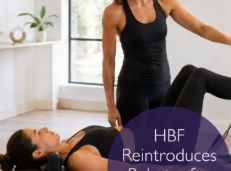
HBF has reintroduced benefits for Pilates from 4 October 2026, following changes arising from the Australian Government’s Natural Therapies Review. Pilates is now included as a Natural Therapy on eligible HBF Extras products, with benefits available for individual and group sessions delivered for health management purposes. General fitness or recreational Pilates classes are not eligible. HBF is using the Australian Regional Health Group (ARHG) provider recognition system to determine eligible providers. PAA has an existing arrangement with ARHG, with PAA Level 2 Pilates Practitioners and above able to be recognised where they meet the required criteria. Check your eligibility Members…
Brittleness – The Other Side of the Strength Discourse
Our physical strength is something we are often only forced to address when it fails us. By definition, brittleness is the point at which a material fails to resist the forces on it. Have you ever contemplated why you are working to build strength, or are you simply responding after reaching a point of brittleness? One of the joys of working with my husband to develop products, such as the Makarlu range, is that we have long discussions about their function and the qualities of materials. Yes, riveting conversations about shore hardness scales, brittle scales and strength measures are…
Collaboration, Standards and Choice: Strengthening the Pilates Profession Together
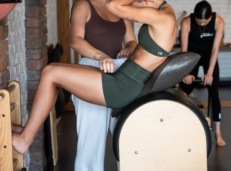
Sometimes it takes a difficult situation to remind us what an industry is capable of when we choose to come together. The recent liquidation of Breathe Education left a group of Pilates students facing uncertainty about their education, their investment and, importantly, their future careers. These were students who had made a decision to invest in Pilates education and suddenly found themselves asking: What happens now? Where do I go? Who can I trust? As President of the Pilates Association Australia (PAA), I believe moments such as these are when the role of a professional association becomes particularly important. We…
PAA Annual General Meeting 2026
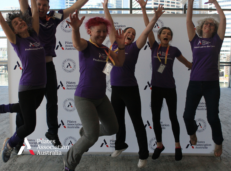
The Pilates Association Australia held its 2026 Annual General Meeting on 4 September, providing an opportunity to reflect on a significant year for the Association and the Pilates profession more broadly. A major focus of the year was the continued work towards private health fund recognition for Pilates. During the year, the PAA progressed from advocacy and negotiation to implementation, including signing an agreement with the Australian Regional Health Group and developing the professional standards, documentation and member guidance required to support provider recognition. Three member webinars were also held to help explain the emerging arrangements. Another major area of…
The Genealogy of Pilates: Why knowing where the work comes from matters to where it is going
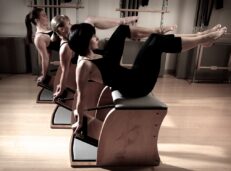
When we talk about genealogy in Pilates, we are not talking about ancestry in the traditional sense. We are talking about a lineage of knowledge — who learned from whom, who taught whom, and how the work of Joseph Pilates travelled from one generation of teacher to the next. At its simplest, genealogy gives us a family tree. But in Pilates, the tree is more than names. It represents the transmission of a method. Joseph Pilates created what he called Contrology — a system of physical training built around a complete and interconnected body of work. He taught that work…
Newly Elected 2026 PAA Committee Members
The Pilates Association Australia is pleased to announce the Committee members who were newly appointed at the 2026 Annual General Meeting, held on Friday 4 September 2026. As the number of nominations received did not exceed the number of available positions, a ballot was not required and all nominees were elected unopposed. Bruce Hildebrand and Karen Goh continue in their current positions. We thank each Committee member for volunteering their time, knowledge and experience to support the PAA, its members and the broader Pilates profession. Office Bearers The following members were elected unopposed to the PAA’s office bearer positions: KIMBERLEY…
Book Review: The Pilates Teacher’s Toolkit
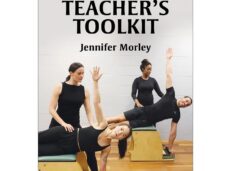
As a Pilates instructor, it’s so easy to get swept up in the daily grind of teaching classes, managing schedules, and running from studio to studio. When I first sat down with this workbook, I expected a fairly standard guide on movement mechanics. What I found instead was a deeply personal toolkit that completely shifted how I see my career, gently reconnecting me with why I teach Pilates in the first place, and how I truly want to show up for my clients. Staying Grounded in My “Why” For me, Pilates has always been a deeply personal journey. Sitting with…
Music Licensing in the Pilates Studio: What Owners and Instructors Need to Know
Written by Kimberley Garlick, PAA President Based on a professional discussion with Jose Horn about music licensing for Pilates and fitness businesses in Australia. Music is woven into the experience of many Pilates studios. It can establish atmosphere, help instructors create energy and flow, and contribute to the overall experience clients associate with a studio. But there is an important business question sitting behind the playlist: If we play music in a Pilates studio, what are we actually required to pay for? For many studio owners, music licensing can feel confusing. Questions arise around Spotify and Apple Music, instructors bringing…
The Future of Smart Pilates: Can Technology Enhance Our Teaching?

For many years, the Pilates profession has relied on the instructor’s trained eye to observe movement quality, identify compensations and guide clients toward more efficient movement patterns. While technology has transformed many areas of fitness and healthcare, Pilates has remained largely dependent on human observation and expertise. That may be about to change. The recent emergence of smart reformers, wearable sensors and artificial intelligence (AI)-driven movement analysis tools suggests that technology is beginning to enter the Pilates space in a meaningful way. Systems that can measure spring resistance, force production, movement tempo, alignment and weight distribution are becoming increasingly sophisticated,…
Building professional connections with allied health practitioners

Strong professional relationships are an important part of a sustainable Pilates practice. For Pilates instructors, connecting with local allied health practitioners can help build trust, strengthen professional credibility, and support more connected care for clients. These relationships also help other health and movement professionals better understand the role qualified Pilates instructors can play in supporting movement, wellbeing, strength, mobility and confidence. Allied health practitioners may include physiotherapists, osteopaths, chiropractors, GPs, psychologists, exercise physiologists, massage therapists, women’s health professionals, specialist clinics and other local health providers. The right professional network will look different for every instructor, depending on their community, experience,…