
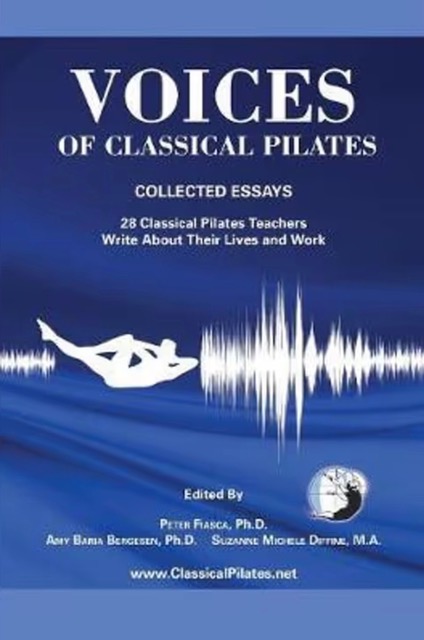
28 Classic Pilates teachers write about their lives and their work
Edited by Peter Fiasca Ph.D., Amy B Bergesen PhD, Suzanne M Diffine M.A.
As the title states, this is a collection of essays by teachers who may or may not be writers. The Essays have been collated into chapters that take you on a walk through the history and methodology that is (was) Pilates.
It reads a little like a cult worshipping of Romana to start. Which nearly put me off, but then came some essays on Kathy Grant which felt more relatable to my experience of teaching Pilates to humans, not elite dancers. The essays then go into teaching methodology, which I think is always useful to read. Our craft IS teaching, and theories and tips on teaching are a great help.
There are essays on apparatus history, athletic applications, and Pilates and Academia. The final chapter by Richard Rossiter saved the book for me. It felt non-sentimental, had the right dose of personal and factual, and was a relatable and inspiring story that makes me want to keep teaching and learning.
I am not a classical teacher. Reading this book made me acutely aware how little I know about “Classical Pilates.” And yes, it made me rethink its benefits, the role it plays in what Pilates is now and why it is important that I understand it better. I was mentored by a Physiotherapist, and moves like roll over, jackknife, overhead, etc. were frowned upon; reading about “the Method”, its progressions and flow have reminded me of the importance of spinal mobility and strength in Pilates.
This book is a reaction to what is now seeming like a long industry debate of “what is Pilates.” And WHO gets to say they teach it.
There are some great essays in this book. Standouts for me were the chapters by Cara Reeser, Brett Howard, Junghee Won, Cary Regan and the closing chapter by Richard Rossiter.
Not all the essays were of equal standard, and as a non-dancer I found the plethora of dance anecdotes and references tedious. However, what it shows is the lineage of success. Pilates grew to popularity through the dance world. The “Elders” whose names we know were dancers, not boxers. This for me also highlights why Contemporary Pilates has evolved. Most of my clients are not, have never been and never will be dancers.
I did really appreciate the chapters from non-dancers who came to Pilates to improve in other sports, and would have liked more of these.
If you’re a history nerd, then order yourself a copy of this book. You will read about Gratz, the Pilates Trademark trial and multiple experiences of learning from Romana, Kathy and more. It’s a book you can pick and choose your essays from, suggest to clients to remind them how nice you are, or teachers in training for context. If you’re a lone wolf Pilates teacher, these essays can act as that “Elder on your shoulder” reminding you that what you’re doing is good, and you can always do it better.
Tahmour Bloomfield – PAA Member and contemporary Pilates teacher. Dip Pilates, Adv Dip FAMO, BA – not in dance.
Comments are closed.