
An illuminating anatomical journey
A review by Helen Fletcher
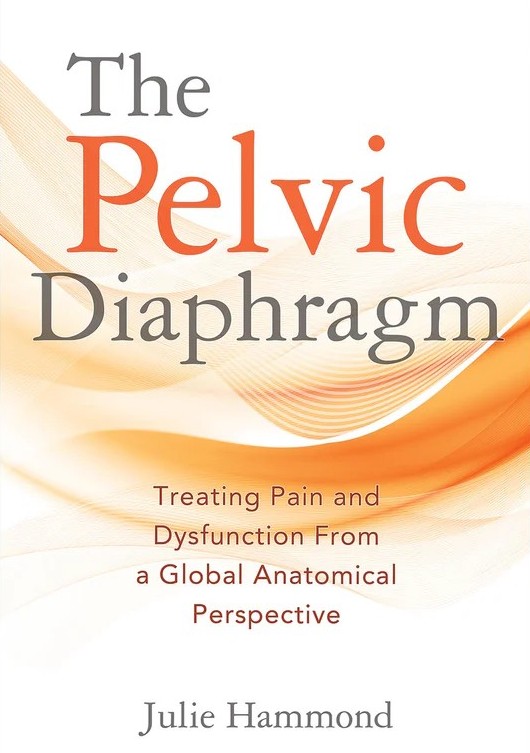
Hammond Julie, 2026 The Pelvic Diaphragm: Treating Pain and Dysfunction from a Global Anatomical Perspective.
Lotus Books 244 pages $56.69 AUD
Author Julie Hammond’s aim for The Pelvic Diaphragm was to “inspire and excite the reader about anatomy that is often misunderstood, making complex anatomy relatable”.
In this well designed and illuminating book, the reader is taken on an anatomical journey. Beginning with the author’s ‘why’, we then take a brief look at body reading and its terms, directions on how to use the book, and equipment needed for what the author refers to as experientials.
In chapter two, ‘The Fascial Origami’, we take a deep dive into this new anatomy, the fascial system, in all its interconnected wonder. From this chapter into the next, we can begin to not only see the bony pelvis itself as the central point of the body, the starting point for postural assessment, but to see the influence on the pelvis of the interconnected fascial system. How the pelvis and pelvic diaphragm are balanced within the structure and tensegrity of the body, and how this balance affects function and pelvic health.
From here, the author takes us into chapters on ‘The Pelvic Diaphragm’, ‘Connections from Below -The Feet and Legs’, ‘Respiratory Diaphragm’, ‘The Thoracolumbar Fascia’, and ‘The Floor of the Mouth, Larynx and Jaw’. These chapters are comprehensive and rich in information that includes common postural patterns, key takeaways, and treatment aims for movement and manual therapists. Along with the experientials for you, the reader to practice and then introduce to your clients, there are also manual techniques for manual therapists to practice, experience, and then introduce to their clients. It is at the conclusion of these chapters that the exploration of the global anatomical perspective is complete, and as readers we are now fully aware – and I challenge you to not have a sense of awe at the many influences on the health and function of the pelvic diaphragm.
The last two chapters bring the theoretical and anatomical information into entire chapters of practical application, with a focus on technique, cautions and contraindications. The first of these two is dedicated to “Self-Myofascial-Release” contributed by Fiona Palmer, Movement Therapist, bodyworker and Anatomy Trains Educator. Followed by “Treating Pelvic Dysfunction with a Global Lens through Pilates: Stacking Up the Diaphragms”, with Sharon Michau, a 3rd generation Classical Pilates Instructor. It is in these two chapters that we movement educators and teachers can begin to really explore the theory within the context of movement, through self-practice and personal exploration, or directly into practical application with our clients.
The technical language in this book is at times dense, and may challenge some readers, but The Pelvic Diaphragm is bursting with experientials throughout which can transport you from deep anatomical text into a movement and felt experience, something that I believe will resonate very well with movement teachers and educators and will certainly help to fulfil the author’s wish to make complex anatomy relatable.
Armed with the knowledge in this book, movement educators and manual therapists and all forms of physical therapists will be very well equipped to educate, inform and inspire their clients.
This book would be an invaluable addition to the professional libraries of Physiotherapists, Osteopaths, Pilates and movement therapists, manual therapists, personal trainers, and students of anatomy and the fascial system.
Author Julie Hammond has achieved her goal to “inspire and excite the reader about anatomy that is often misunderstood” as she opens our eyes and minds to the incredible interconnectedness of the body, enabling the reader to explore outcomes made possible by this deeper knowledge and understanding of the Pelvic Diaphragm and its important role in both function and form.

20% off for PAA Members
PAA Members – 20% discount off
This book was generously supplied for review by Woodslane Health and is available to PAA members with 20% discount.
Woodslane Health is the local distributor in Australia for Handspring Publishing and Singing Dragon Publishers. Handspring and Singing Dragon publish a range of authoritative bodywork, manual therapy, and complementary health titles for professionals, trainers, teachers and general readers.
Woodslane Health offer PAA members a 20% discount across all their titles with free delivery for orders over $100.
PAA Members: Check under Resources in the members’ site for the Woodslane Health discount code.
Comments are closed.