
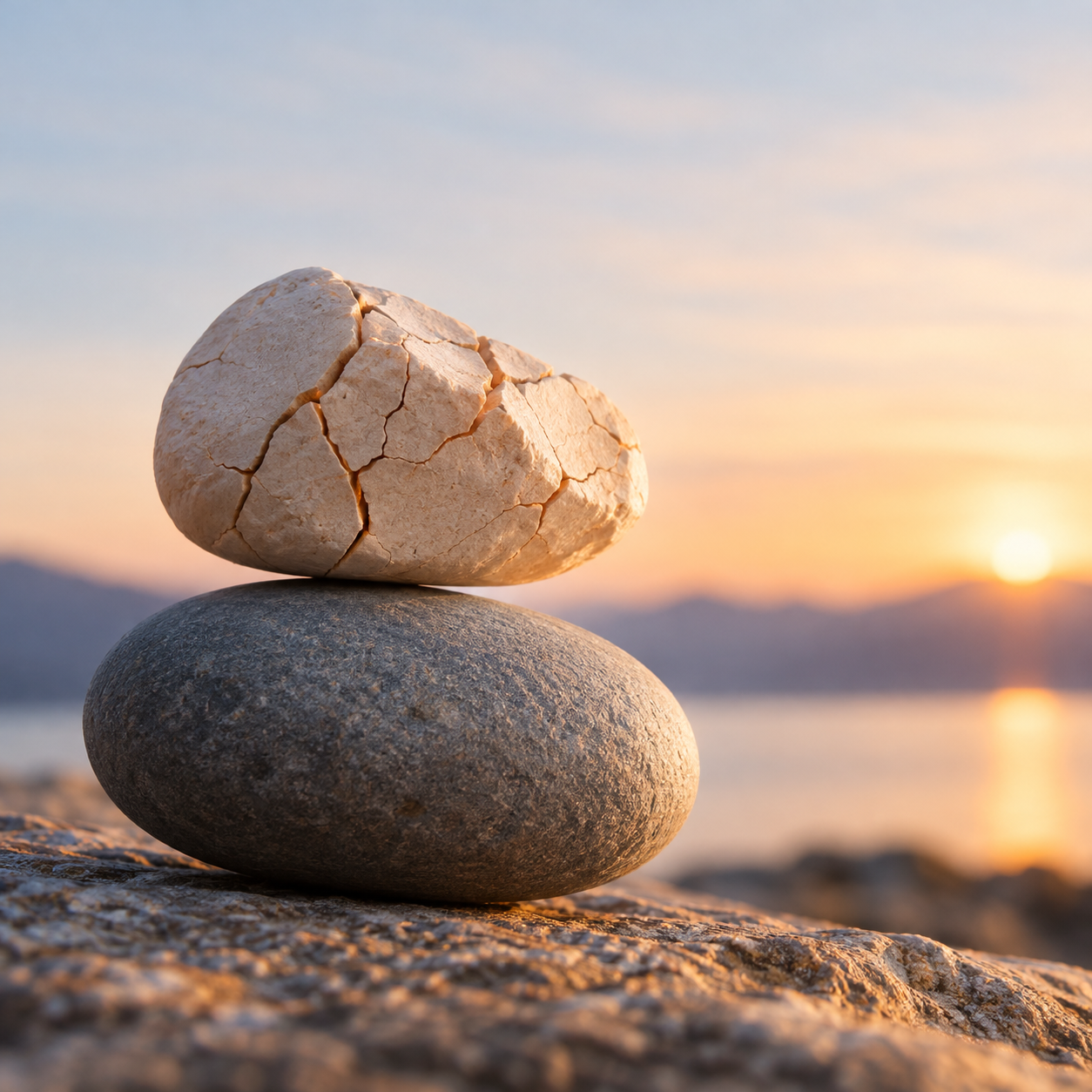
Our physical strength is something we are often only forced to address when it fails us. By definition, brittleness is the point at which a material fails to resist the forces on it. Have you ever contemplated why you are working to build strength, or are you simply responding after reaching a point of brittleness?
One of the joys of working with my husband to develop products, such as the Makarlu range, is that we have long discussions about their function and the qualities of materials. Yes, riveting conversations about shore hardness scales, brittle scales and strength measures are commonplace around our dinner table. To be honest, I generally just want to know if a material comes in a pretty magenta colour, but alas I participate and learn. Recently, some of our discussions have been bubbling away in my head and left me thinking about the current discourse around strength training. The current mainstream perspective on strength has me troubled. It seems being strong is “trendy” once more. I recently attended a Pilates conference and an international presenter stated, “it is about time we started to normalise the look of women with muscle and definition that comes from lifting heavy.” The statement felt off to me; it felt like the presenter was making an argument about aesthetics rather than health. Upon further reflection, this little Cheshire Cat decided to play in the rabbit hole and explore this strength debate further, and contemplate what happens when we zero in on one aspect of health, while ignoring the wider picture. In this article, I approach the concept of strength and the human body from the perspective of someone developing a consumer product that needs to be fit for purpose. Writing this article certainly challenged my thoughts about what essential materials underpin the human experience. We will explore the role of strength in human health, what happens when strength becomes brittleness, the commodification of strength and at what stage pursuing strength creates a negative marginal return to the body and the person.
The physical materials
The four base materials in the human body are the connective tissue, epithelial tissue, muscle tissue and nervous tissue. Connective tissue supports other tissues and binds them together (bone, blood, and lymph tissues). Epithelial tissue provides a covering (skin, the linings of the various passages inside the body). Muscle tissue includes striated (voluntary) muscles that move the skeleton, and smooth (involuntary) muscle, such as the muscles that surround the stomach. Nerve tissue is made up of nerve cells (neurons) and is used to carry “messages” to and from various parts of the body (Mediline, 2025). As practitioners, our focus is generally on the strength of muscle and connective tissue (most commonly bone). While all of our body tissues start to deteriorate as we age, muscle loss (sarcopenia), and bone loss (osteoporosis) are of particular concern because it can result in frailty and increased risk of hospitalisation and death. Hip fractures are a common consequence of sarcopenia and osteoporosis, and are often used as a risk factor for an early death. In Australia, 26% of first hip fracture patients died within one year of admission to hospital (Hip fracture care pathways in Australia) (AIHW 2023). For the 43%of first hip fracture patients who were alive one year after their hip fracture, they were administered at least one prescription for an osteoporosis-related medication in the year after their hip fracture.
The systems and intangible connections The human materials form a variety of interdependent systems e.g. cardiovascular, lymphatic, immune, and neurological systems etc., etc. In addition to physical materials we have our “human nature or soul”, which encapsulates a complex mixture of emotions, experiences, cognition, empathy. It allows us to interact with our environment and others. We require a combination of physical materials and intangible components for daily function.
“Art is when a human tells another human what it is to be human.”
– Adrian Elmer
In a world of AI and robotics we can forget the importance of the intangibles and think that we are just a series of physical inputs that can be optimised to achieve strength and longevity. This tunnel vision has led to an obsession with the consumerisation of health and wellness, as is evident in the strength discourse.
So what are strength and brittleness?
Strength measures how much force a material can tolerate, while brittleness measures how it fails (sudden fracture vs. gradual deformation). The body is designed to fail; it is this mortality that makes us human. While strength is an admirable goal, it does not prevent a body from failing. It is delusional to believe that we can conquer the body by just doing more, consuming more, building more muscle. As I was saying above, being human is to be more than the mere physical. To ignore and separate the emotional, spiritual, immunological and social components is impossible. This perspective is something I find lacking from the current strength discourse. Sadly, so many “strength proponents” focus merely on the physical body, leaving us as the flesh equivalent of a mechanical robot. This mechanical approach is evident in the blueprint approach of Bryan Johnson, the tech entrepreneur, who spends $10 million annually on anti-ageing and an extreme health regime. In July 2026, Johnson announced that he had autoimmune gastritis (AIG), a chronic condition where his immune system attacks the stomach’s acid-producing parietal cells. It might be lost on someone like Johnson, but good health has always required more than just strength, vitamins and the control you can assert over your body. Johnson discovered the brittleness of his existence despite his disciplined consumption.
Osteoporosis the boogeyman
Let’s unpack some of the strength discourse by considering that great boogeyman: the threat of osteoporosis. Osteoporosis is commonly spoken about in the movement community. Each year there are new courses targeting teachers and clients about this topic. Modern media describes osteoporosis in catastrophic and extreme terms, sensationalising statistics to portray a massive demographic wave of
osteoporosis. They describe osteoporosis as a disastrous diagnosis and highlight its potential for causing bone fractures and early death. Avoiding osteoporosis is now a common reason people cite for starting strength training. Let’s look at some statistics around osteoporosis and osteopenia, and their prevalence in Australia (AIHW, 2024). Statistics are a good starting point when looking into a health topic and sifting through research.
Table A – Prevalence of Osteoporosis in Australia (AIHW)
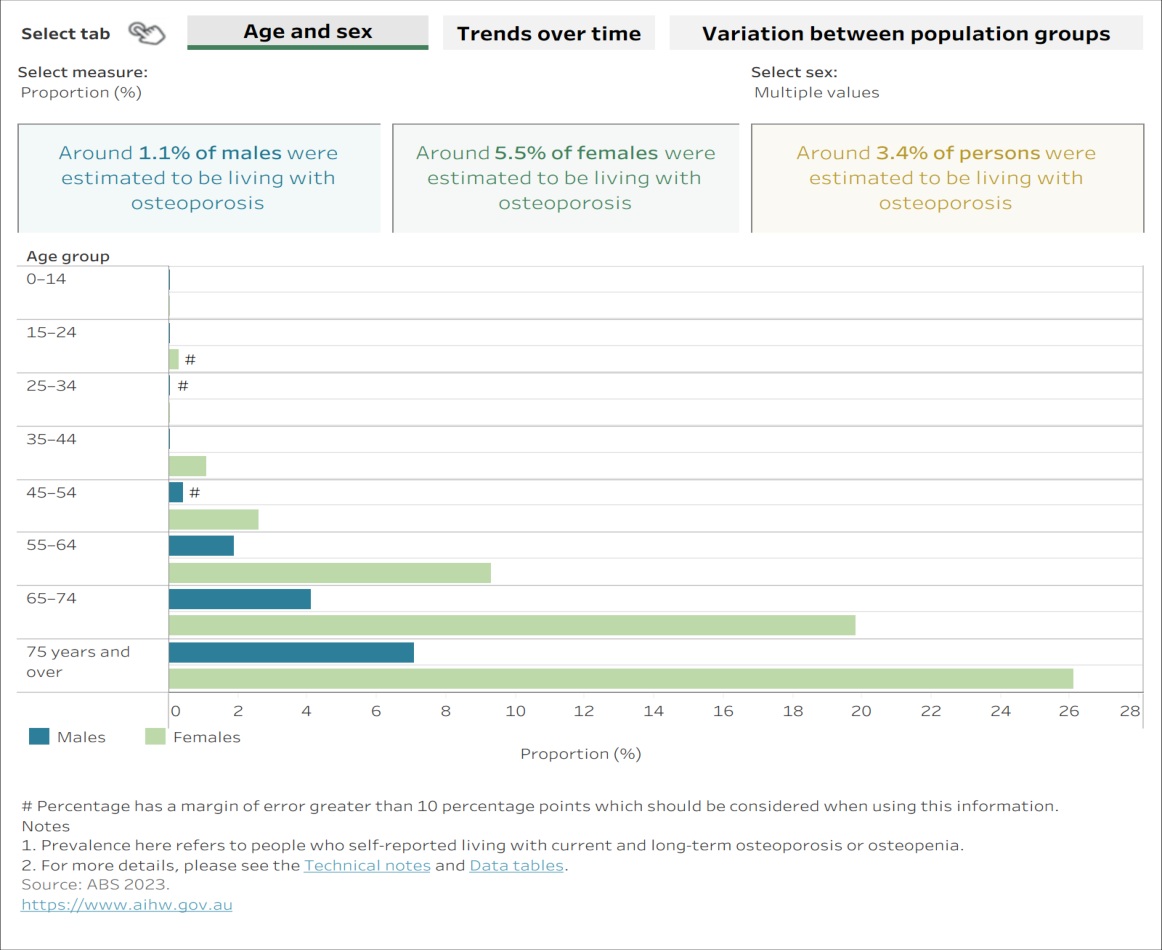
The osteoporosis numbers appear large when you look at the data, but let’s look a bit closer. Yes, 5.5.% of all women living with osteoporosis is a high number, but at the same time that means 94.5% of women do not have osteoporosis for the majority of their lives. These statistics also reveal that the vast majority of women only develop osteoporosis as they age with a prevalence rate of 26% of women over 75 years old. Let us remember that in Australia life expectancy for women is 85.1 years. We rank 6th
in the world for female longevity and 2nd in the world for male longevity (UN, 2022). Yes, osteoporosis is an issue for older women, but is our focus on osteoporosis programs for this older group of women or is the strength marketing targeting much younger age groups? When we then drill down into the research on who has osteoporosis we find that there are many comorbidities strongly linked to osteoporosis (AIHW, 2024). The statistics collected by the Australian Institute of Health and Wellbeing reveal that the majority of people living with osteoporosis have or have had other chronic health conditions.
Table B – Prevalence of Chronic Conditions for people with Osteoporosis in Australia (AIHW)
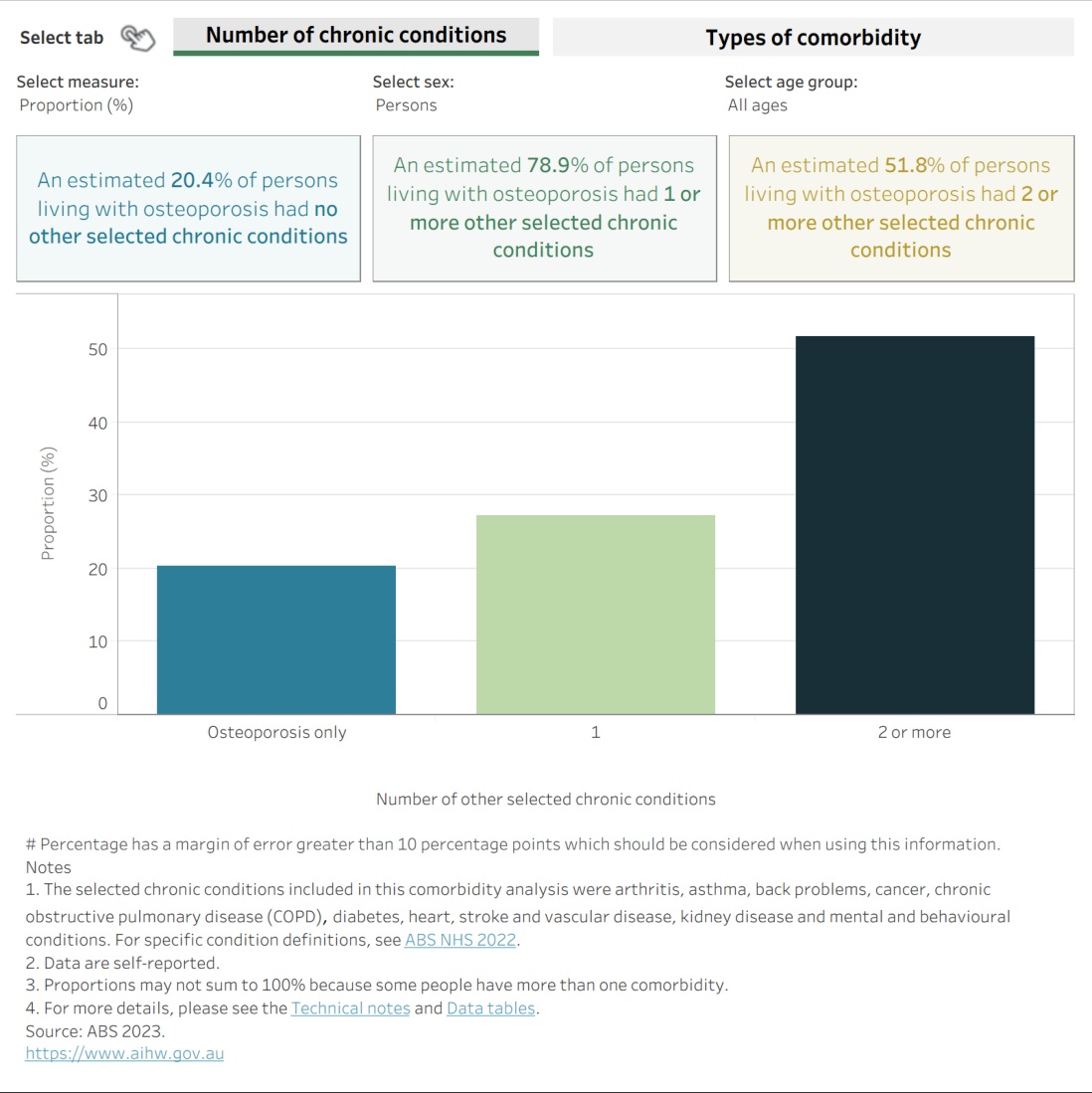
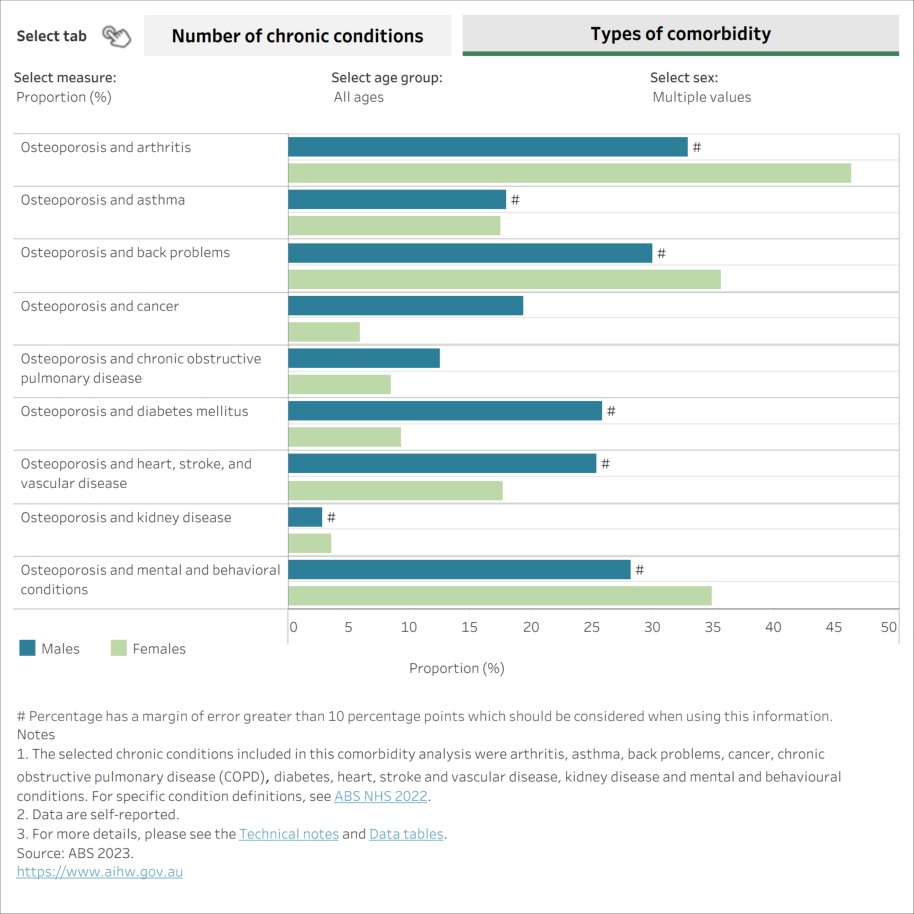
Let us examine some of these chronic health conditions (see table below), and discuss why certain conditions may predispose people to developing osteoporosis.
- It is well known that asthmatics treated with continuous systemic corticosteroids (SG) have affected bone metabolism, bone mineral density (BMD), and ultimately an increased risk of osteoporosis (Kumarathas I, et al, 2020).
- There are over 100 types of arthritis and many of the autoimmune arthritic conditions are managed with corticosteroids. Similar to asthmatics, the use of these corticosteroids impacts bone health.
- In oncology, high-dose methotrexate disrupts bone homeostasis by impairing osteoblast function, enhancing osteoclastogenesis, and causing endothelial damage. Sokhan.A, et al , 2026).
- Chronic kidney disease (CKD) significantly increases the risk of osteoporosis and fractures due to the complex interplay of CKD-mineral and bone disorder (CKD-MBD), which disrupts calcium, phosphate, and vitamin D metabolism, leading to secondary hyperparathyroidism and altered bone turnover. This condition, often termed CKD-associated osteoporosis, involves both reduced bone mineral density and compromised bone quality, with prevalence rising sharply in advanced stages (G4, G5, and dialysis-dependent)(Imanishi Y, Furukubo T, Shoji S.; 2025).
- Mental and behavioural conditions like anxiety and eating disorders can predispose people to developing osteoporosis. In any given year, approximately one million Australians report living with an eating disorder (Deloitte, 2020). Additionally, roughly a third (31.6%) of Australian adolescents engage in disordered eating behaviours within any given year.3 There is substantial material that demonstrates that eating disorders interfere with bone density and development.
Table C – Types of comorbidities when examining the prevalence of Osteoporosis in Australia (AIHW)
I think it is important to note that much of this osteoporosis data was collated before the “GLP-1 phenomena”(Ozempic etc.), a topic of a different article I am researching. Preliminary findings indicate that GLP-1Ra causes modest bone mineral density reduction and enhances bone remodeling, favoring resorption similar to the effects of calorie restriction. In simpler terms, the research indicates that there is bone density loss in people using GLP-1 medications. It is widely recognised that restricted caloric intake leading to weight reduction is usually accompanied by loss of muscle mass and that such loss can be detrimental (Mechanick JI, Butsch WS, Christensen SM, et al. , 2025). It will be interesting to monitor the data going forwards, but I think we will likely see a rising concern about the development of sarcopenia and osteoporosis in people who have been using GLP-1 medications.
There is no doubt that for people who have chronic health diseases or fall into the osteopenic risk category that targeted bone strengthening programs can be beneficial.The lift heavy programs are evidence-based and can certainly be helpful for building bone mass and preventing rapid deterioration in someone’s bone health. For
such individuals, we should advocate for incorporating appropriate strength training. But what about for the rest of us?
Why is all this relevant?
The question that I am asking in the context of this strength debate is what is health, what are aesthetics and are we getting caught up in a fear campaign about our health? Is this exercise and strength advice just giving us another reason to be anxious or add additional tasks to an already busy and stressful life. There is an expression thrown around that all taking vitamin supplements gets you is expensive pee. Are we just hopping onboard another trend? I did statistical research on this topic because I wanted to have a well-rounded perspective about who was at risk of developing osteoporosis. However, I also wanted to understand how the current marketing around strength impacts the average person’s capacity view of good health and how best to achieve it.
In 2015, my husband experienced a hip and spine fracture from a bad cycling accident (fortunately he has lived beyond the one year risk factor). He has always lived a very active and sporty life involving surfing, cycling, running, hiking and so forth. He has never smoked and has no known auto-immune conditions that have required medical interventions. He would be classified as physically strong and fit. Now at 65 years old, he has been diagnosed with osteoporosis of the lumbar spine and asks himself could he have done more to avoid this diagnosis. I would probably answer no, but now his challenge is how does he continue to stay as strong and functional as he can despite that diagnosis.
There is nothing wrong with strength training or wanting to be physically strong. However, we can be at risk of getting so caught up focusing on one aspect of our health, that we miss the full picture of what health and vitality really are. Brittleness is inherent in the human condition and yes, when we choose to ignore our risk factors, we can become brittle. But health is more than muscles and bones. It is the culmination of the human experience that includes mental health, relationships, mobility and emotional health. Let us be honest about what the current health statistics reveal:
- 25% of Australians under the age of 65 years old have or are likely to experience mental health problems
- Australia’s first State of the Nation Report into Social Connection has revealed that nearly one in three adults (32%) are lonely, while one in six (17%) report experiencing severe loneliness; putting them at a higher risk of lower workplace productivity, poor physical and mental health and chronic disease.
- Approximately one million Australians are living with an eating disorder in any given year; that is, 4% of the population.
- 3.4% of all Australians are living with osteoporosis.
I want to reframe the strength discussion to focus on how we can best support people to be functionally able to do the activities they enjoy, so they can live strong and independent lives. There are many ways to achieve this type of strength and my method is certainly not the only way. I use the Pilates Method to support human strength while taking a holistic approach within the broader context of human health. I don’t solely focus on one intervention, namely strength from lifting weights, and I like to tailor my methods to a person’s broader health needs or priorities. For example, I like to garden, and this requires me to lift bags of soil and potting mix (about 30kg a bag). I have to combine strength and endurance to carry, lift and twist while putting this soil into pots. I have to carry and move pots, tree mulch and so forth to maintain my garden. Would I consider this a form of strength training? Yes, I would. Do I need to pay someone other than my gardening centre to feel good about it? No.
My advice to clients contemplating adding more strength programming into their lives is as follows.
1. What are your risk factors for osteoporosis? For the approximate 5% of the population with osteoporosis, strength training is one part of a multi-factorial intervention used to reduce risk of fracture and frailty. To complement medical support, strength programming can be a beneficial addition.
It is interesting to note that when a person moves from “muscle and bone strength to brittleness” the recommended client guidelines shift their focus to fall prevention, which is often linked to what I would call neurological strength training.
2. Do you have osteopenia? I ask clients about any comorbidities, medications, history of eating disorders and genetic factors that may be relevant. These factors are important as they may also contribute to the progression to osteoporosis.
Remember, osteopenia is not a disease. It is a statistical band or measurement score between -1.0 and -2.5. It means bone mineral density is lower than the peak bone mass of a 30-year-old — the reference population the World Health Organisation chose in 1994 when it created the classification (WHO, 1994).
There are several activity interventions recommended for people with osteoporosis and osteopenia that aim to reduce the occurrence of fracture and subsequent frailty. These include programs that:
- Use heavy weights to encourage bone osteogenesis (bone strength)
- Incorporate balance and agility to reduce likelihood of fractures. These types of programs fit well in a Pilates studio setting.
The influential LIFTMOR trial (Watson et al., J Bone Miner Res, 2018) found that postmenopausal participants who did exercises such as deadlifts, squats, squats and overhead presses at 80–85% of one-rep maximum, plus impact loading (jumping chin-ups with drop landing) for 30 minutes twice weekly for close to a year built significant bone mineral density at both the femoral neck and lumbar spine. The findings of the LIFTMOR trial and other studies have led to the creation of several different strength programs that emphasise bone osteogenesis.
As these programs involve heavy weights, we don’t tend to offer them in a Pilates studio because of the associated safety risk. However, some of the exercises such as chin-ups and jumping are possible to incorporate into a Pilates class. If clients are wanting or needing strength programs I encourage them to try out different classes. I generally don’t lose clients because they are attending a strength program. Often they increase their Pilates classes because they need the balance that Pilates provides them.
In these circumstances, strength training is one part of a multi-factorial intervention to reduce the risk of escalating to osteoporosis. These clients need professional advice about nutrition, strength and balance training, as well as support on how to manage any comorbidities that may be contributing to this loss of bone integrity.
3. Are you struggling with other health indicators e.g. loneliness or mental health factors? Will adopting a strength or exercise program help strengthen supportive social connections, increase resilience or conversely, result in more isolation?
When I opened my studio in 2002, one of my first clients was a young woman in recovery following hospitalisation from anorexia nervosa. At the time I also had a young teacher working with me who was obviously struggling with an eating disorder, something she admitted many years later. In both cases I observed rigid focus on physical activity and control. It made them very lean and apparently physically strong, but at the same time their disciplined boundaries and behaviours made it difficult to connect with them on a human level. When I reflect on the mental states of both these young women, they were brittle and teetering on an edge of collapse at any moment. I had to be very specific in creating boundaries for these young women, allowing them to participate in strong classes in moderation. Attending classes a few times a week was more beneficial for them than attending daily. They needed space to find ways to expand their lives beyond their bodies.
4. What brings you joy? Are there activities you can incorporate that help you to build and maintain strength while also adding joy to your day e.g. gardening, sculpting, adult ballet, camping or sailing. Can you participate in a structured exercise class that supports social engagement or joy? When someone is enjoying an activity, they are more likely to be consistent and when it comes to building strength, consistency is essential.
For example, on Saturday mornings I have several hours of semi-private classes filled with women in their mid 50’s. These ladies all juggle full-time work, care for elderly parents (with dementia), and have teenagers at home.These women work hard in their class, but they also laugh and share stories. Several of them meet for coffee afterwards. All of them do these Pilates classes using the entire array of equipment and admit that the supportive class environment is part of the reason they remain consistent. It is what they do for them in a week. These women are not complaining, but they don’t need more guilt and pressure about physical perfection and performance. I advise clients to find an activity that multitasks in this way for them.
5. If you do have osteopenia or osteoporosis, what does your doctor recommend? Do you feel comfortable with those recommendations and how can I help you achieve these recommendations within the scope of my skills?
Let’s now discuss how we can practically incorporate strength training. My strategies in working with clients who need, or want to add more of a strength focus into their programs are:
1. Start with goal setting and task-based analysis to identify what kinds of activities that client enjoys and wants to do more frequently. Convert that task analysis into exercises that can support an increase in load tolerance for that individual. For example, I have put together a class called the gardening chair, which uses the Wunda chair to support building strength.
2. Carefully manage the introduction of load to minimise issues of tendinopathies. This is one of my frustrations when working with clients who are undertaking strength programs elsewhere. In my experience, they have often been loaded inappropriately, so much of my time in a Pilates class is spent helping clients progress safely and enforcing their self-efficacy.
Time and time again I have clients come to me who have been told they need to do strength classes. It is great that they go to a gym, or a specialist class (of which there are many). If they are consistent, they start to see progress. But then their knee starts niggling; their shoulder starts hurting, and not in a good way. Instead of going to the gym, clients start going to a physiotherapist or another manual therapist and their consistency and motivation disappear. I find that I often play the role of the intermediary who helps the clients to manage load and alignment so that they can go and enjoy that strength class and maintain the consistency needed for progress.
3. Ensure alignment and control is taught, no matter how simple the exercise.
4. Incorporate neurological and cognitive challenges to support the strengthening of the coordination, balance, spatial awareness and memory systems. Including these challenges supports active engagement in daily activities, functional strength and independence. This can be described as multicomponent exercises, I call it Pilates with focus.
5. Intelligently progress and adapt the work to the needs of the client in front of me.
6. Work with the person and their team. If they are working with Allied Health practitioners on a specific strength program, I try to understand what care they
are receiving and use Pilates to complement that program. In other words, I am one person in a broader team working to support the person in front of me.
7. Avoid the guilt, comparison and fear game with clients. Encourage and remind them they are doing the best they can at this particular point in time. Yes, you can always do more, but at what cost to you as a whole person? Will the pursuit of strength just make you brittle emotionally, mentally or in other physical ways?
I find myself reminding clients not to compare themselves with people who have different circumstances and capacity. I am rarely on instagram, but this week a video popped up on my feed from a well-known celebrity Pilates instructor. She was revealing the routine she follows that allows her to look so good in her 50’s. My spidey censors went yuck as the message was largely aesthetics focused. I shook my head as she regaled us with the 4-5 hours a day of Pilates, barre, strength and running she dedicates to maintaining her physique. I admire her dedication and clarity in her goal to look great, but they are not my goals and I won’t feel guilty that I’m not working that hard. To many there would be diminishing marginal returns from 4 – 5 hours of “aesthetics work” a day. To me the opportunity cost associated with such a lifestyle would be extremely high, as it would mean less time for reading, socialising, caring and living.
To conclude this article, I want to reinforce that we are human, and strengthening our physical health is but one piece of building the resilience needed to protect ourselves from becoming brittle.
Written by Carla Mullins, PAA Member and Approved Training Provider (Body Organics)
References
Deloitte Access Economics. Paying the price: The economic and social impact of eating orders in Australia. Australia: Deloitte Access Economics; 2012.
Imanishi Y, Furukubo T, Shoji S. Clinical approaches to osteoporosis in patients with chronic kidney disease: A comprehensive review. Endocr J. 2025 Aug 1;72(8):847-862. doi: 10.1507/endocrj.EJ24-0271. Epub 2025 Apr 23. PMID: 40268403; PMCID: PMC12340253.
Karam L, Mabilleau G, Paccou J. Effects of Glucagon-Like Peptide-1 receptor agonists on bone health in people living with obesity. Osteoporos Int. 2025 Nov;36(11):2115-2126. doi: 10.1007/s00198-025-07664-1. Epub 2025 Sep 8. PMID: 40920189; PMCID: PMC12628458.
Kumarathas I, Harsløf T, Andersen CU, Langdahl B, Hilberg O, Bjermer L, Løkke A. The risk of osteoporosis in patients with asthma. Eur Clin Respir J. 2020 May 19;7(1):1763612. doi: 10.1080/20018525.2020.1763612. PMID: 32595917; PMCID: PMC7301699.
Mechanick JI, Butsch WS, Christensen SM, et al. Strategies for minimizing muscle loss during use of incretin-mimetic drugs for treatment of obesity. Obesity Reviews. 2025; 26(1):e13841. doi:10.1111/obr.13841
MedlinePlus [Internet].Frank D. Brodkey, MD, FCCM: National Library of Medicine (US); [updated 2020 Jun 24]. Tissue Types; [updated 2020 Jun 10; reviewed 2025 Jan 1; cited 2020 Jul 1]; Available from: https://medlineplus.gov/ency/imagepages/8682.htm
Sokhan. A, Markus A. Hartmann, Stéphane Blouin, Reinhold G. Erben, Jochen Zwerina, Judith Haschka, Martina Behanova, Roland Kocijan, Effects of high-dose methotrexate on bone metabolism: A narrative literature review, Bone Reports, Volume 29, 2026, 101903, ISSN 2352-1872, https://doi.org/10.1016/j.bonr.2026.101903.
Sparti C, Santomauro D, Cruwys T, Burgess P, Harris M. Disordered eating among Australian adolescents: prevalence, functioning, and help received. Int J Eat Disord. 2019;52(3):246-54.
United Nations, Department of Economic and Social Affairs, Population Division (2022). World Population Prospects 2022, Online Edition.
Watson SL, Weeks BK, Weis LJ, et al. High-intensity resistance and impact training improves bone mineral density and physical function in postmenopausal women with osteopenia and osteoporosis: The LIFTMOR randomized controlled trial. J Bone Miner Res. 2018;33(2):211–220. (n=101; mean age ~65; 8 months; 80–85% 1RM, twice weekly, 30 min; significant BMD gains at femoral neck and lumbar spine; no injuries; adherence >90%.)
World Health Organisation. Assessment of fracture risk and its application to screening for postmenopausal osteoporosis. WHO Technical Report Series 843. Geneva: WHO; 1994. (T-score classification: normal ≥ -1.0; osteopenia -1.0 to -2.5; osteoporosis ≤ -2.5.)
Comments are closed.